How to Treat Water in the Backcountry (CDC Guidance)
Clear mountain water can still carry germs. Here is the CDC's advice on boiling, filtering, chemical tablets and UV light, in plain steps.
We may earn a commission when you buy through links on this page, at no extra cost to you. This does not change which products we cover. How we make money.
Water from a lake or stream can carry germs from human or animal waste, even when it looks clean. The CDC says drinking straight from a clear mountain stream is generally not safe. Its advice comes down to one ranking: boiling is best, and filtering then disinfecting is next best.
The four methods
| Method | Bacteria | Parasites (Giardia, Crypto) | Viruses |
|---|---|---|---|
| Boiling | Yes | Yes | Yes |
| Filter, 0.3 micron absolute or smaller | Yes | Yes | No |
| Chlorine or iodine | Yes | Poorly | Yes |
| Chlorine dioxide | Yes | Giardia yes, Crypto somewhat | Yes |
| UV light (clear water) | Yes | Yes | Yes |
Boil
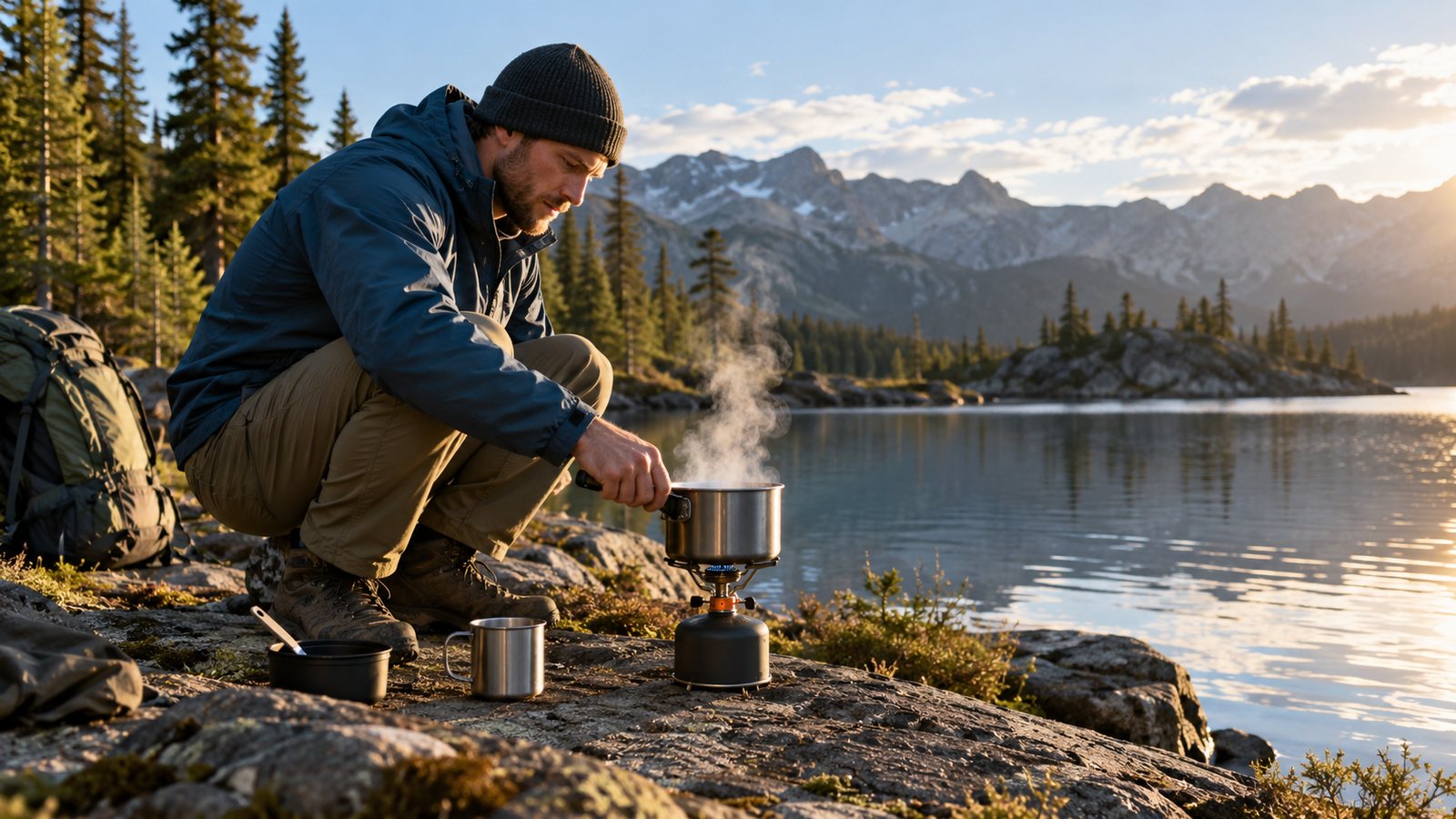
Bring clear water to a rolling boil for 1 minute. Above 6,500 feet, boil for 3 minutes. Let it cool before drinking.
Filter, then disinfect
The CDC says most portable filters remove parasites, and a filter with an absolute pore size of 0.3 micron or smaller also removes bacteria. Filters do not remove viruses. All three filters in our best backpacking water filters list pore sizes of 0.1 or 0.2 micron.
Chemical disinfectants (unscented bleach, iodine or chlorine dioxide tablets) kill bacteria and viruses but may not kill parasites, so the CDC says to filter first. UV pens also need filtered, clear water, because particles can shield germs from the light.
What treatment cannot fix
You cannot make water with chemicals, toxins or radioactive material safe by boiling or disinfecting it. Find another source.
Protect the water for others
Where there are no toilets, the CDC says to bury waste at least 8 inches deep and at least 200 feet from lakes and streams. Bury it downstream of where people collect water. Wash your hands, or use a sanitizer with at least 60% alcohol. That ties in with Leave No Trace.
To keep a filter working, see how to clean a squeeze water filter.
Frequently asked questions
How long should I boil water when camping?
The CDC says to bring clear water to a rolling boil for 1 minute, or 3 minutes above 6,500 feet, then let it cool.
Does a water filter remove viruses?
Most portable filters do not. The CDC says a filter with an absolute pore size of 0.3 micron or smaller removes bacteria and parasites but not viruses. Reverse osmosis filters do remove viruses.
Is iodine safe?
The CDC says people who are pregnant, have thyroid problems or are sensitive to iodine should avoid iodine-treated water, and no one should drink it for more than a few weeks at a time.